
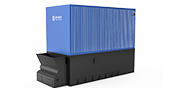
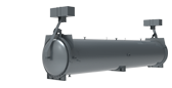

Steam boilers are indispensable core thermal equipment for industrial and civil sectors, covering diverse heating demands including central heating, sterilization, hot water supply and production heat support. Commercially available boilers are mainly categorized into oil-fired, gas-fired and biomass-fired types. Xinli biomass steam boilers adopt renewable biomass fuels with controllable operating costs, perfectly matching heating demands of medium & small commercial and light industrial facilities, making them the mainstream heating solution in current market.
1. Working Principle & Core Structure
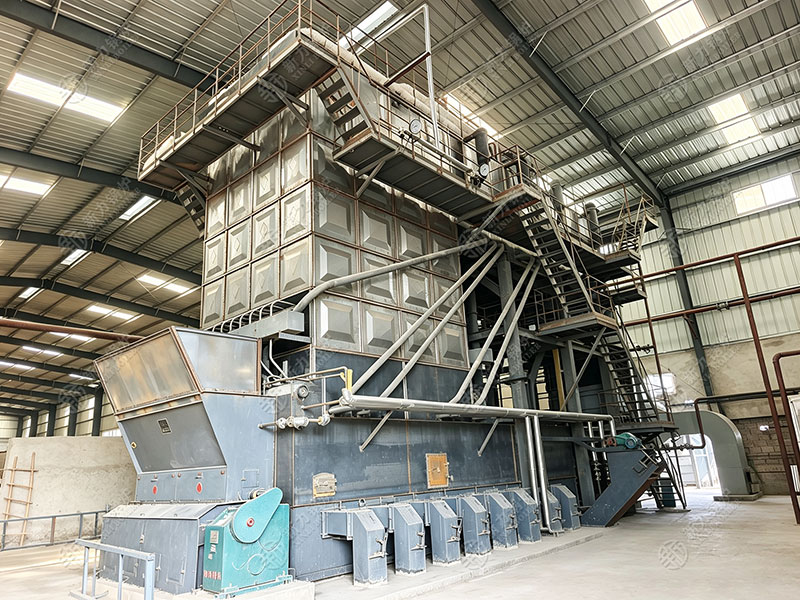
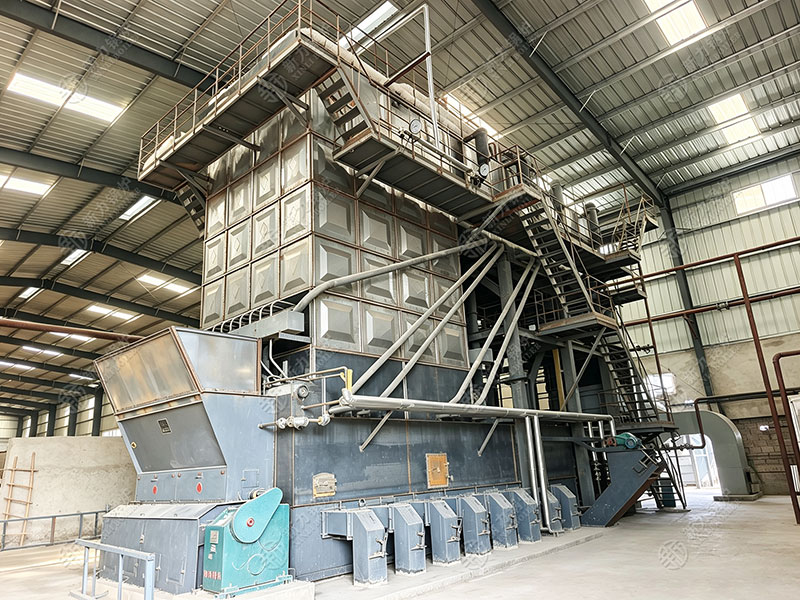
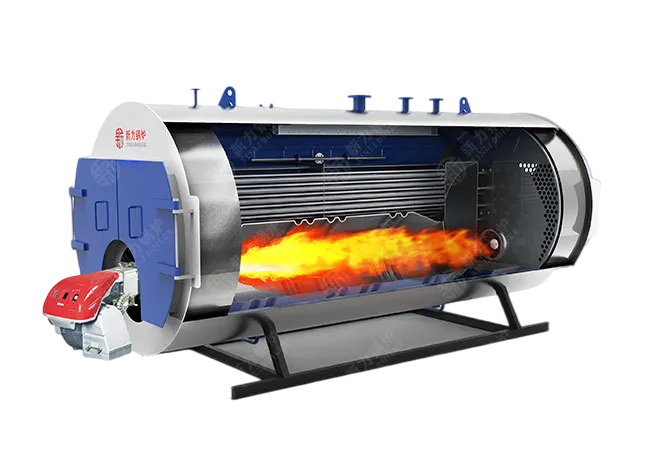
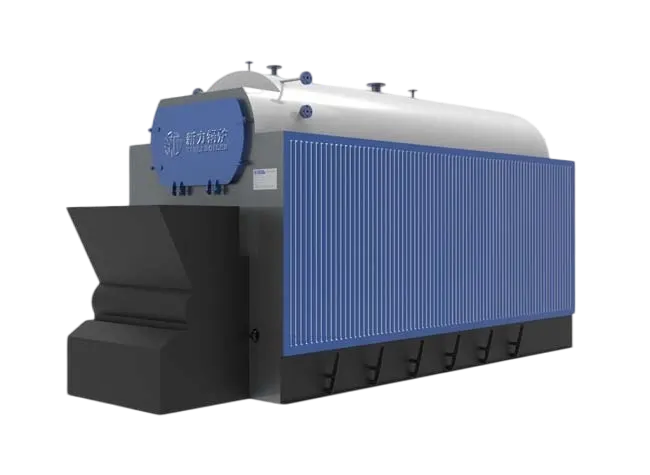
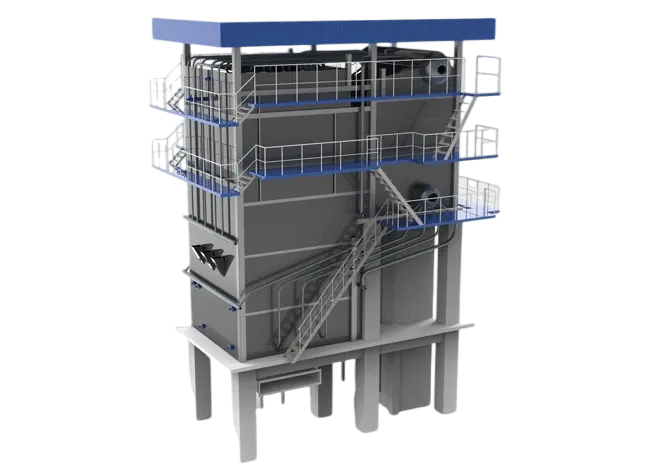
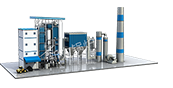
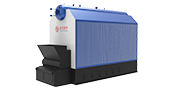
In terms of working principle, Xinli biomass steam boilers mainly burn biomass pellets processed from crop straw and wood chips. Equipped with an automatic feeding system, the equipment steadily transports fuel into the combustion chamber. After full mixing with air, fuel burns evenly, and high-temperature flue gas flows through furnace, smoke tubes and other heat exchange components to continuously transfer heat to water inside the drum. Heated water vaporizes into qualified steam, which is collected and delivered uniformly via the steam header to provide stable heat for all application scenarios. Cooled flue gas that meets emission standards is finally discharged through the chimney, forming a complete and scientific heat circulation system.
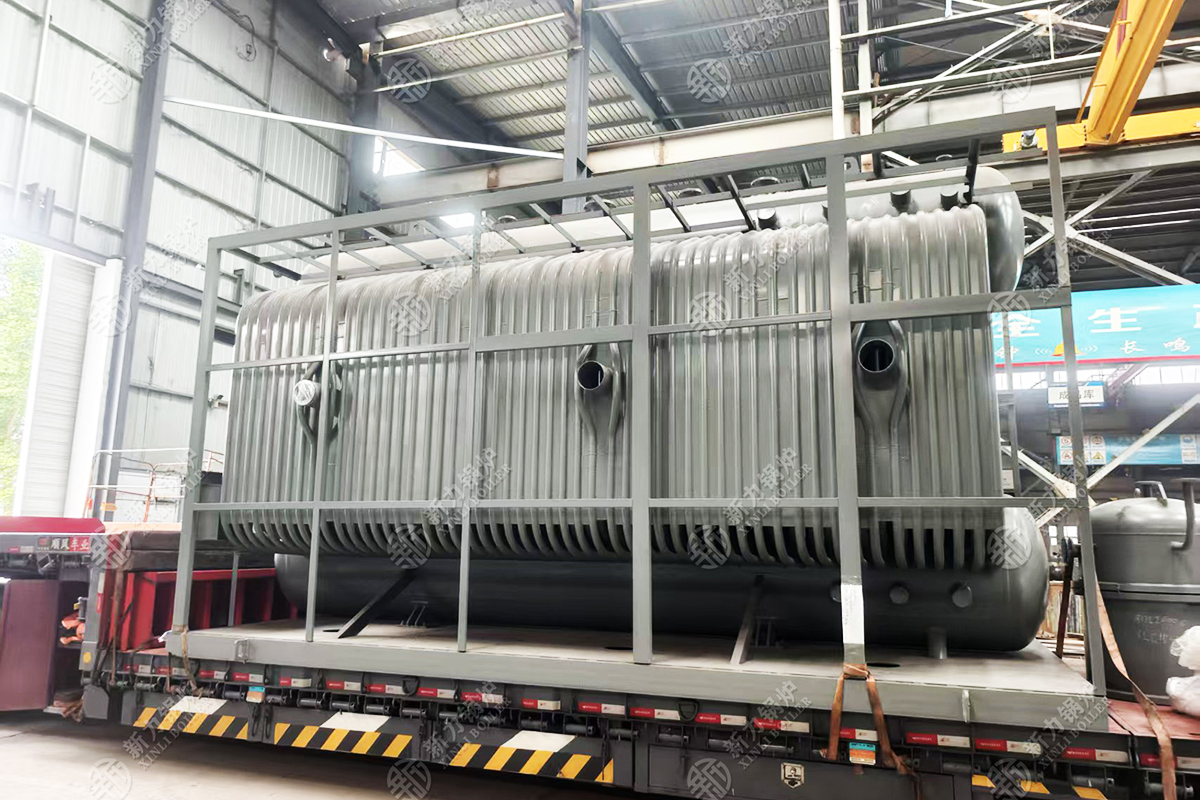
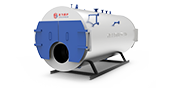
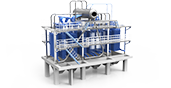
Stable operation relies on well-designed core components with clear, coordinated functions. The combustion chamber is constructed with high-sealing and high-temperature resistant materials to ensure complete fuel combustion and reduce energy loss. The boiler drum is made of high-strength pressure-bearing steel to withstand operating pressure and realize steam-water separation, laying a solid safety foundation. Optimized smoke tube structure expands heat exchange area to improve overall thermal efficiency. Supporting intelligent automatic control system monitors real-time data of water level, pressure and temperature, enabling full-automatic operation adjustment and greatly simplifying manual operation.
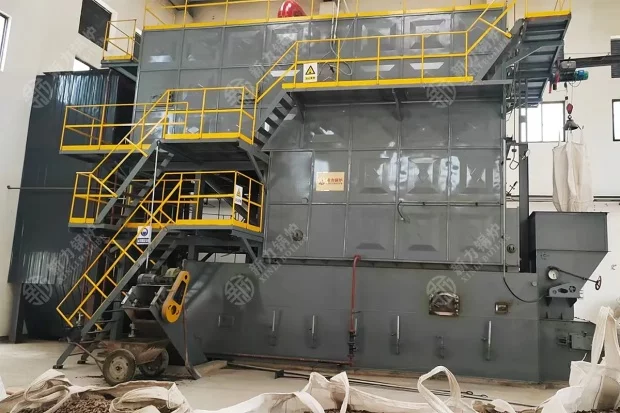
2. Applicable Scenarios & Operation Advantages
This series of boilers fits a wide range of scenarios, ideal for hotels, schools, bath centers and small processing factories with regular medium-small heating demands. Biomass pellets are widely accessible renewable fuels that effectively cut daily operating costs. Compared with traditional coal-fired boilers, biomass fuel generates far less ash residue, lowering cleaning and maintenance workload.
Conventional models range from 0.1 ton to 4 ton, with steam output starting at 100kg/h and rated steam pressure between 0.8MPa and 2.5MPa to meet different heating specifications. The whole unit supports fully automatic operation. After staff sets basic parameters of pressure and water level, the boiler automatically completes feeding, combustion and slag removal with minimal manual intervention, suitable for long-term continuous heating.
3. Core Technical Parameters & Daily Maintenance Guidelines
Standard core parameters include effective water volume of 29L, outlet working pressure of 1.25MPa and rated power of 7.5kW. Effective water volume determines continuous steam supply capacity; outlet pressure affects steam transmission distance and matching performance; rated power is closely linked to fuel consumption.
Standard daily maintenance is critical to extend service life. Operators shall regularly clean ash accumulated inside furnace and smoke tubes to avoid heat efficiency loss; inspect automatic feeding system frequently to prevent blockage and fuel shortage for stable fuel supply; monitor real-time water level and pressure to avoid dry burning, overpressure and other abnormal conditions. Besides, biomass pellet moisture content must be controlled below 15%. Excess moisture will cause incomplete combustion, black smoke and tar accumulation inside pipelines, bringing extra maintenance troubles.
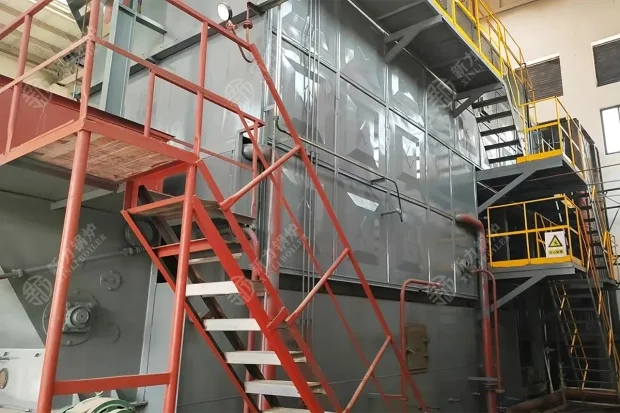
4. Comparative Advantages vs Other Traditional Boilers
Compared with other mainstream boilers, Xinli biomass steam boilers have distinctive matching strengths:
Against oil & gas boilers: Biomass pellets greatly reduce fuel procurement and running costs, with thermal efficiency ranging from 75% to 80%. A dedicated storage area for pellets is required.
Against traditional coal-fired boilers: Higher automation level and easier operation, with sharply reduced discharge of sulfur dioxide, nitrogen oxides and other pollutants, fully complying with modern environmental protection regulations.
5. Comprehensive Summary
For medium and small heating projects, Xinli biomass steam boilers balance low operating cost, stable heat output and eco-friendly performance. It is a high-quality heating solution well-suited for civil commercial heating and light industrial production heat supply.
Xinli Boiler — Specialize In Biomass Combustion, Focus On Waste Heat Energy-Saving Utilization.
More information on LinkedIn: https://www.linkedin.com/feed/update/urn:li:activity:7478370304302440448